

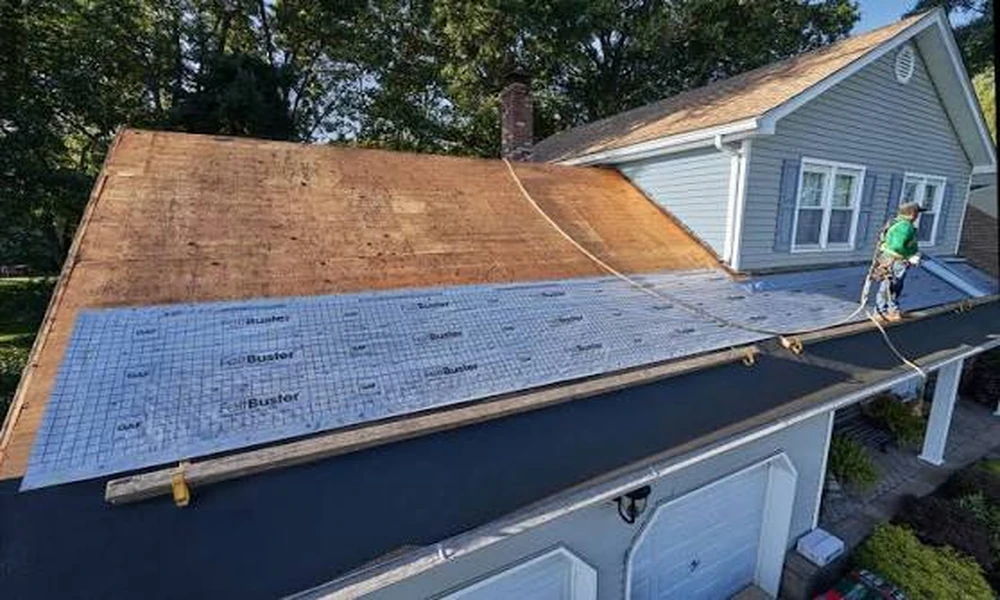
Most conversations about a new roof begin with color samples. Weathered wood or charcoal, a sharper dimensional profile or something flatter, and maybe a matching ridge cap. Those choices matter for curb appeal, but the shingles are the last few millimeters of a system that is several layers deep, and the layers underneath decide how long the whole thing lasts.
Homeowners planning an asphalt roof replacement in Austin often hear the same advice from experienced crews: judge a bid by what it says about the work below the shingles. Contractors who start every job with a full tear-off and a board-by-board look at the decking, as the team behind stanleybuilt.com does, are working from the bottom up, and that is the most useful way for an owner to think about the project too.
So instead of starting with shingle brands, it helps to follow the roof the way a crew builds it, one layer at a time.
Layer One: The Deck Everything Rests On
The decking, or sheathing, is the wood surface nailed to your rafters. Every nail in the new roof is only as secure as the wood it lands in.
Austin’s housing stock makes this layer more interesting than in many cities. Homes built in the 1950s and 1960s in neighborhoods like Allandale, Crestview and Brentwood often have plank decking, individual boards with gaps between them. Many were later covered with shingles anyway, and that can work, but gaps wider than standard spacing leave nails grabbing air. Newer homes in Round Rock, Cedar Park and Southwest Austin typically use OSB panels, which hold up well until a slow leak swells the edges and softens them.
Once the old roof comes off, a crew can see water stains, delamination, rot around chimneys and sagging between rafters. A good bid explains how replacement wood will be priced, usually per sheet, so you are not surprised by a number scribbled on a change order halfway through the day.
Layer Two: Drip Edge and the Overlooked Perimeter
Drip edge is the bent metal strip along the eaves and rakes. It directs water away from the fascia and keeps wind driven rain from wicking back under the first course of shingles. Current residential code calls for it on asphalt roofs, yet older Austin homes frequently have none, and the rot shows up at the fascia board years later.
It is a small line item that protects the wood trim around your entire roofline, so confirm it is listed in writing.
Layer Three: The Underlayment Beneath It All
Underlayment is the water resistant sheet that goes over the decking before any shingle is nailed down. It is the backup plan for the moment a storm lifts a tab or hail cracks a shingle.
Traditional asphalt felt still exists, but most crews now use synthetic underlayment. It is lighter, tears less easily when someone walks on it and handles hot attic conditions well. In valleys, around skylights and at pipe penetrations, many installers add a self-adhering membrane that seals around nails. Austin rarely sees ice, but those spots collect the most water in a downpour, so the extra protection earns its keep.
Layer Four: Flashing Where Roofs Usually Fail
Ask anyone who repairs leaks for a living and they will tell you most roofs fail at transitions, not in the middle of a slope. Chimneys, walls that meet a lower roof, dormers and plumbing vents all need metal flashing that overlaps in the right direction.
Here is a quick set of questions worth asking about this layer:
- Will step flashing along sidewalls be replaced or reused?
- Will the chimney get new counter flashing cut into the mortar, or will sealant cover the old metal?
- What kind of pipe boots are planned, and are they rated for UV exposure?
- How will the crew handle any skylights during the tear-off?
Reused flashing and heavy sealant can look fine on install day, yet Central Texas sun breaks down caulk quickly. Fresh metal tends to outlast it by a wide margin.
Layer Five: The Shingles and How They Are Fastened
Only now do the shingles go on. Beyond color and style, two details deserve attention. The first is nailing. Manufacturers specify where nails belong on the shingle and how many to use, with more fasteners often required for high wind warranty coverage. Nails placed too high or driven crooked leave shingles vulnerable to the strong gusts that come with spring storms.
The second is timing. Asphalt shingles have adhesive strips that bond to the course below once the sun warms them. In July, shingles soften and can scuff under work boots, so crews often start at dawn. In a cold snap, the seal strips may not activate for days, which leaves new shingles more exposed to wind until temperatures rise. Spring and fall are popular for good reason, though a skilled crew can work around either extreme.
Layer Six: The Air Moving Through the Attic
Ventilation is the least visible part of a roof and one of the most important in Austin. A balanced system pulls cooler air in at the soffits and lets hot air escape at the ridge or through roof vents. Without that flow, attic heat cooks the underside of the shingles, shortening their life and pushing your air conditioner harder.
A replacement is the best moment to correct ventilation, because the decking is exposed and ridge vents can be cut cleanly. Mixing vent types, such as a ridge vent alongside powered fans, can short circuit airflow, so it is worth asking how the plan balances intake and exhaust.
The Paperwork Layer
Inside city limits, a full reroof generally goes through Austin Development Services, while some surrounding cities handle shingle replacements differently. The City of Austin residential permit page offers an interactive guide for checking whether your project needs a permit and how to apply. Homeowners in an HOA should also expect an architectural review for color and material changes, which can add a week or two before work starts.
Most reputable contractors pull the permit themselves, but it is your house, so ask for the permit number and keep it with your warranty documents.
Thinking From the Bottom Up
A shingle roof replacement can happen in a single day, which makes it easy to assume it is a simple swap. In reality, the crew is rebuilding a layered system on the spot, and every layer they skip or rush stays hidden until the next storm finds it.
When bids arrive, read them from the bottom up. Look for decking inspection and pricing, drip edge, underlayment type, new flashing, fastening details and a ventilation plan before you weigh shingle colors. Two quotes with the same shingle can describe very different roofs, and the difference lives in the layers nobody sees from the street.
