

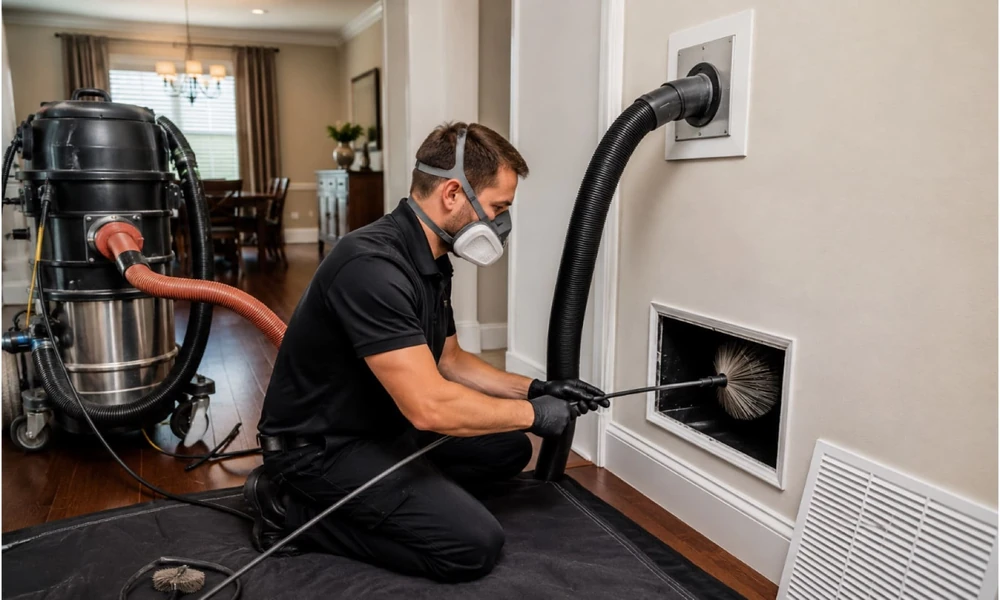
Few home services are marketed as hard as duct cleaning. The pitch is simple and appealing: the air in your house passes through those ducts, so cleaner ducts must mean cleaner, healthier air. It sounds so obviously true that most people never ask whether the evidence agrees.
If you are weighing the service from a company such as Next Level Restoration, which lists air duct cleaning alongside water, mold and fire restoration, it helps to know what the US Environmental Protection Agency actually concludes. The answer is more careful than the sales pitch, and it can save you money.
What the EPA Concludes
The agency covers the question on its page Should You Have the Air Ducts in Your Home Cleaned?, which was last updated in February 2026 and began as a 1997 publication. It says a general recommendation cannot be made because knowledge is still developing. It does not recommend routine cleaning, only cleaning as needed.
The Health Claim Is Unproven
The page says duct cleaning has not been shown to prevent health problems, and that studies do not clearly show that dirty ducts raise the particle levels in a home. It notes that other sources such as cooking, smoking and outdoor pollution can contribute more to your exposure. In its own words, no one knows whether duct cleaning prevents health problems.
Situations Where Cleaning Is Worth Considering
The EPA does name circumstances where cleaning may be warranted. These are substantial visible mold growth inside hard surface ducts such as sheet metal, ducts infested with vermin such as rodents or insects, and ducts clogged with excessive amounts of dust and debris. If none of those describes your system, the page offers no reason to buy the service.
Fix the Moisture First
The page adds a point that is easy to miss: underlying causes, such as moisture, should be fixed first, or the problem will likely return. It goes further and says controlling moisture is the most effective way to prevent biological growth in air ducts. Cleaning mold out of a duct while the damp that fed it remains is paying for a repeat.
Claims That Should Make You Wary
The EPA warns against hiring duct cleaners who make sweeping claims about health benefits, or who recommend cleaning as a routine part of heating and cooling maintenance. It also says the EPA does not certify duct cleaners, so be skeptical of any claim that a company is EPA certified.
Choosing a Provider
If cleaning is warranted, the page advises getting written estimates from at least three companies and checking references. It suggests asking whether the company follows the standards of the National Air Duct Cleaners Association, asking about state licenses, and checking for complaints with a consumer affairs office or the Better Business Bureau. It expects a written scope and total cost before work starts, and proper practices such as checking for asbestos and exhausting vacuums outside the home or using HEPA equipment. The page says some of its licensing references are dated, so verify current requirements.
Sealants and Chemical Treatments
The page urges caution with add-ons. It says EPA has not registered any biocides for fiberglass duct board or fiberglass-lined ducts, and not to allow chemical biocides or treatments unless you fully understand the pros and cons. It says sealants should never be used on wet duct liner, to cover actively growing mold or to cover debris in the ducts.
Cheaper Ways to Keep the Air Cleaner
The EPA lists several lower-cost measures. Use the highest efficiency filter the manufacturer recommends and change it regularly. Repair leaks and keep drain pans draining properly. Have cooling coils and drain pans cleaned during routine service. Replace wet or moldy fiberglass insulation. Have fuel-burning furnaces, stoves and fireplaces inspected before each heating season to guard against carbon monoxide.
After a Fire or Flood
This section is general knowledge and not from the page. Duct cleaning is sometimes recommended after smoke or water damage, and in those cases the question is whether the damage reached the ducts. The EPA’s list of situations above is a sensible way to talk through that with a contractor, and the answer may be to replace wet or contaminated material and not to clean it.
About the Company Behind the Link
The website at the linked address belongs to Next Level Restoration, which says it is based in Oklahoma City, Oklahoma, and serves surrounding communities including Del City, Midwest City, The Village, Warr Acres, Bethany, Moore, Edmond, Mustang, Choctaw and Yukon. Its listed services include air duct cleaning, flood and emergency water removal, structural planning and drawing, mold remediation, fire damage restoration and storm damage restoration. The site says the company is open 24 hours, offers free estimates and is licensed and insured, and that its team members are certified and insured. It gives a phone number of (405) 850-9021. It does not state years in business, license numbers or warranties, and it does not say which standards its duct cleaning follows, so ask directly.
