

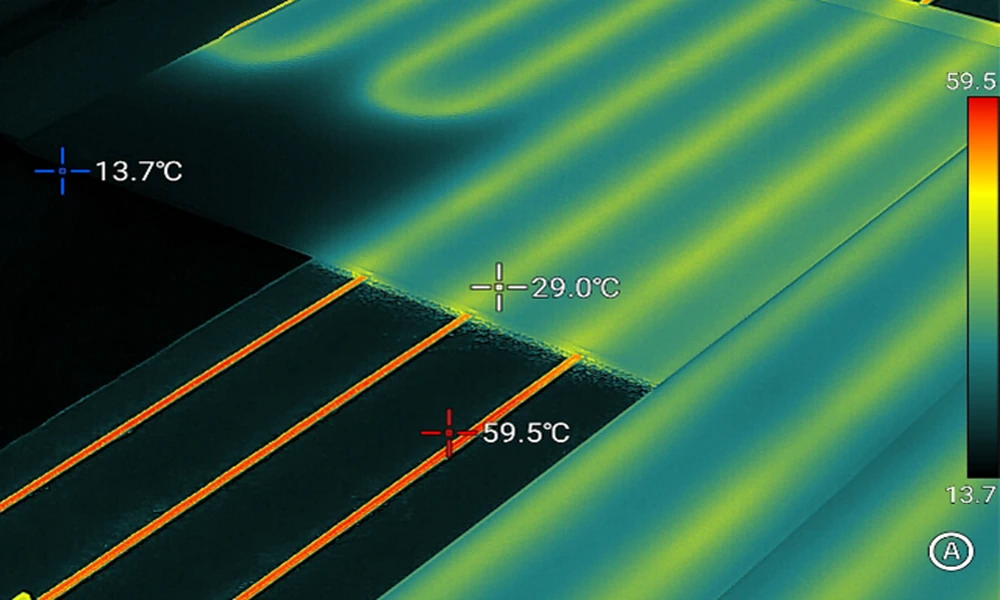
A thermal image of a radiant heated floor should be read alongside the system’s operating state and the floor’s construction. A cooler patch or a warm route can help direct an investigation, but it does not alone identify a leaking pipe or a failed component. Establish how the system was operating when the image was made.
This matters for a Barrie homeowner who notices uneven warmth and considers renting a camera before arranging repairs. The image may reveal a useful pattern. Its meaning still depends on the heating system, the observation conditions and competent interpretation. A colourful view should narrow the next question rather than become an automatic instruction to open the floor.
A warm route is evidence of heat reaching the surface
Radiant systems can use different arrangements, including water-based or electric heating. Identify which system the property has before discussing what an image might show. A concern about a hydronic circuit and a concern about an electric element require different technical knowledge, even if the surface patterns look superficially alike.
FLIR’s professional floor-heating case study shows how thermal imaging can assist investigation of radiant systems. It also presents pattern variations that require further examination. The useful lesson is that imaging can guide skilled assessment; it is not a promise that every household image will reveal a unique cause.
The camera is showing thermal information associated with the visible floor surface. It is not a direct photograph of every buried component or a guarantee of its exact depth and route. Do not use a thermal line alone to choose a drilling location, even when the line appears to follow the expected path of heating below.
Construction records and the system’s own documentation remain relevant. An installation drawing can help an appropriate professional relate the image to the intended arrangement. If the records are incomplete, retain that uncertainty. A clear-looking pattern should not be used to invent missing details about what is concealed.
Startup and steady use are different moments
An image taken soon after a system begins heating may describe a different stage from one taken after ordinary operation. Record the known operating state and timing without assuming a universal warm-up period. The relevant conditions depend on the system and floor, and the inspection professional should decide what comparison is meaningful.
Suppose one photograph was made during the first morning use and another after the room had been occupied all afternoon. Differences between them may be worth exploring, but they are not a controlled before-and-after repair test. Explain the circumstances so the reviewer does not mistake a change in operation for a change in the building.
Thermostat settings alone do not establish the state of every component. A displayed target temperature tells the assessor something about the intended control, but it is not direct evidence that a particular pump, valve or heating element is functioning. Leave those component checks to someone qualified to assess the system.
Avoid repeatedly changing controls to produce a more dramatic image. That can make the sequence harder to interpret and may depart from the system’s proper use. If an assessor requests a particular inspection condition, arrange it through the appropriate person and keep the request tied to that system’s instructions.
The useful comparison includes the floor covering
Describe the visible floor and any areas covered by rugs or furniture. A patterned image should be interpreted in relation to the actual room, not as if every location had identical conditions. The observer needs to know whether a cool-looking rectangle corresponds to an object, a different finish or an area with another known characteristic.
Do not move heavy furnishings or remove a floor covering simply to improve a camera view without considering handling and material requirements. Tell the assessor what could and could not be observed. An access limitation is useful information; an unrecorded change to the room can complicate the comparison.
Keep ordinary photographs with the thermal views so that surface boundaries remain recognizable. A close crop of colour can conceal the fact that two different materials meet at the point being compared. This does not mean a photograph explains the thermal result; it helps the person interpreting it understand the physical context.
If the complaint is comfort, describe that too. A resident’s report that one seating area feels different is not a technical diagnosis, but it can help define the investigation. Ask whether the assessment is intended to explain comfort, system operation or suspected damage, because these are related but distinct questions.
Use an assessed finding before opening the floor
Drying Equipment’s thermal-camera rentals in Barrie provide an equipment category to discuss for an appropriate inspection. Confirm the supplied model and the instruction available. Renting the instrument should not be assumed to include a heating-system diagnosis or to replace a qualified assessment where a repair decision is involved.
If the image raises a concern, bring it to the relevant heating or building professional with the operating context. They can decide whether other checks are needed. A cooler region may warrant investigation without supporting immediate demolition, and an apparently even pattern does not prove that every concealed component is sound.
Repair scope should explain the finding being addressed and the evidence supporting it. This protects the homeowner from treating the first striking image as the final answer. It also gives the person performing the work a more precise purpose than simply following a coloured patch on a screen.
The image becomes most useful when it is connected to a real heating system at a known moment. Keep that relationship intact and let competent assessment determine what follows. The floor may need attention, but its thermal portrait should help locate the question before anyone decides where to open it.
