

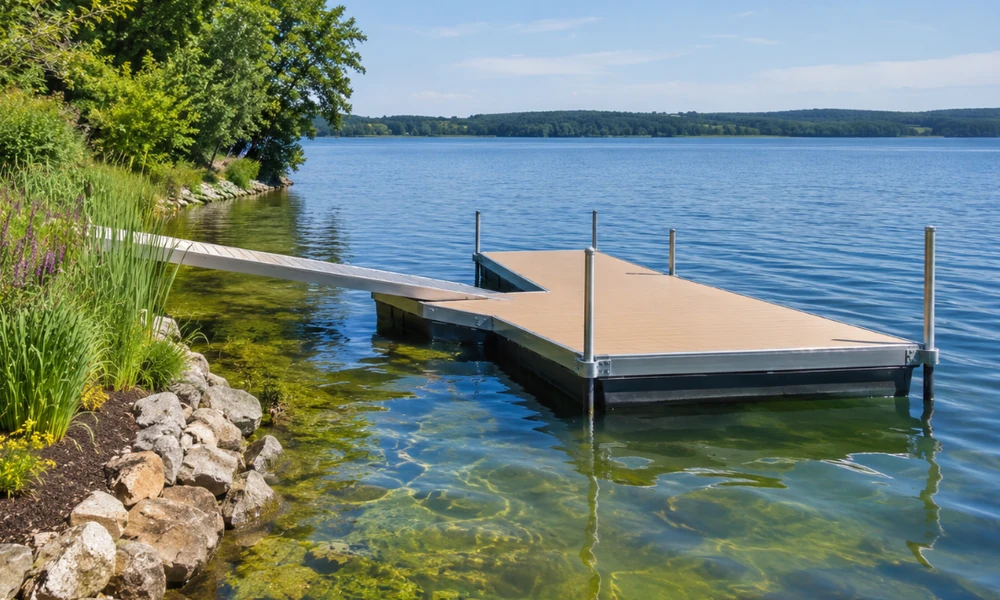
Floating docks can make waterfront areas easier to use. They give people a place to launch a kayak, tie up a boat, fish, or simply sit near the water. They can also work well in places where water levels rise and fall.
Still, a floating dock changes the shoreline in some way. Even a small structure can affect sunlight, water flow, plants, and animals nearby. That does not always mean the impact will be harmful. It just means the dock should be planned with care.
A well-designed floating dock may protect the shoreline better than a poorly placed fixed structure. But the details matter. Honestly, most environmental problems start when those small details are ignored.
How Can a Floating Dock Affect the Water?
A floating dock sits on the surface of the water. Because of that, it can create shade underneath.
Some shade is normal. Trees, boats, and shoreline plants also block sunlight. But a large dock may reduce the amount of light reaching underwater plants. These plants need sunlight to grow, just like plants on land.
Underwater grass and other aquatic plants can help:
- Provide food and shelter for fish
- Hold sediment in place
- Improve water quality
- Support insects and small water animals
- Reduce erosion in shallow areas
If a dock blocks too much light, plants below it may become weak or disappear. This is more likely when the dock is very wide, built close to the water, or made from solid materials that do not allow light through.
Using grated decking may help sunlight pass into the water. A narrower dock may also reduce shading. It sounds like a small design choice, but it can make a difference.
Water Flow Matters Too
Water should be able to move around and under a floating dock.
A dock that blocks normal water movement may cause leaves, trash, and plant matter to collect in one area. The water may become still. In some cases, this can lead to bad smells, algae growth, or lower oxygen levels.
The dock layout should match the direction of waves and currents. Anchoring systems should also be placed carefully so they do not damage the bottom of the waterway.
Chains and cables that drag along the bottom may scrape plants or disturb sediment. Pilings may be a better option in some places, though not everywhere. The right choice depends on water depth, soil, waves, and local rules.
There is no single anchoring method that works for every site. It would be easier if there were, but waterfront properties are rarely that simple.
Can Floating Docks Help Protect Shorelines?
Floating docks can reduce some kinds of shoreline damage.
For example, they give people one clear place to enter and leave the water. Without a dock, people may walk down the same muddy bank again and again. This can crush plants, loosen soil, and create erosion.
A floating dock may also keep boats away from shallow shoreline areas. Boat propellers can disturb the bottom, damage plants, and push waves toward the shore. A properly placed dock gives boats a controlled area for loading and unloading.
Still, the dock itself should not be placed too close to sensitive plants or wildlife areas. Protecting one part of the shoreline while damaging another would not help much.
Why Shoreline Plants Are Important
Natural shoreline plants do more than make the area look green.
Their roots help hold soil together. They slow down rainwater before it reaches the water. They may also filter dirt, fertilizer, and other pollutants.
Removing too many plants to make room for a dock can weaken the shoreline. A better plan usually keeps as much natural vegetation as possible.
In some places, native plants can be added near the dock entrance. These plants are often better suited to local weather and water conditions. They may require less care too.
Hard seawalls are sometimes needed, but natural shoreline protection may work better in calmer areas. Rocks, native grasses, and planted slopes can reduce erosion while still providing habitat.
Choosing Better Dock Materials
Dock materials can affect water quality.
Untreated or marine-safe materials are usually better choices near water. Some older treated wood products may release chemicals over time. Newer products may be safer, but buyers should still check what the material is designed for.
Composite decking can resist rot and insects. It also avoids splinters, which is useful for bare feet. However, low-quality composite boards may become hot or wear down over time.
Metal parts should resist rust and corrosion. Loose flakes, damaged coatings, and broken hardware may fall into the water if maintenance is ignored.
The best material is not just the one that lasts the longest. It should also fit the water conditions, local climate, and maintenance plan.
Construction Can Cause Temporary Damage
Even a careful dock project may disturb the area during construction.
Workers, tools, and machinery can damage shoreline plants. Soil may wash into the water. Trash, screws, plastic, or packaging may also fall into the water if the work area is not controlled.
Construction should avoid sensitive nesting or breeding periods when possible. Barriers may be used to keep loose soil from entering the water. Materials should be stored away from the shoreline.
After the dock is installed, the area should be checked for debris and damaged plants. This step feels obvious. Still, it is sometimes forgotten once the main work is finished.
Regular Maintenance Protects the Environment
A floating dock needs inspections.
Loose boards, damaged floats, leaking containers, rusty hardware, and broken anchors should be repaired quickly. Clean the dock without using harsh chemicals that may enter the water.
Trash should be removed often. Fishing line is especially dangerous because birds, turtles, and fish may become trapped in it.
A floating dock can support waterfront access while still protecting the shoreline. The goal is not to avoid every possible change. That may not be realistic. The goal is to reduce unnecessary harm.
Good planning, smart materials, proper placement, and regular care can help the dock and the natural shoreline exist together. It takes a little more thought at the start, but that is usually easier than repairing environmental damage later.
This post was written by a professional at Supreme Marine Floating Docks. Supreme Marine Floating Docks is dedicated to providing top-quality floating docks and marine accessories that combine durability, innovation, and superior performance. While we are a new brand, our team brings over 50 years of combined industry experience, making us a trusted name in the marine world. We are passionate about designing and delivering products that meet the highest standards, ensuring reliability and longevity in all marine environments. Whether for residential, commercial, marina docks Palm Beach, our docks are crafted with precision and care, setting a new benchmark in the industry. At Supreme Marine, we don’t just build docks-we create lasting solutions.
