

A small digital hygrometer costs about as much as a sandwich, and it may be the most revealing thing you can set on a bookshelf. Leave one in the living room of a Woodbridge or Manassas home for a full year and the number on its screen will wander from the low twenties in January to the mid sixties in a muggy September. Most of the comfort complaints people blame on their thermostat, from static shocks to clammy sheets, trace back to that one moving figure.
Homeowners who want help reading those numbers and adjusting the equipment behind them can turn to Comfortable Air Services, a family owned heating and cooling contractor working across Northern Virginia. Its technicians install and repair air conditioners, heat pumps, furnaces, gas boilers and water heaters, and they also handle humidifiers and indoor air quality equipment, with emergency calls answered at any hour.
The useful way to think about humidity is not as a single target but as a series of bands. Each band has its own symptoms, its own causes and its own fixes, and a Northern Virginia house usually visits all of them before the calendar turns over.
When the Screen Drops Below Thirty
Cold air simply cannot hold much water. Take a January morning at 30 degrees outside with a respectable 60 percent relative humidity. Pull that same air indoors and warm it to 70 degrees, and its relative humidity falls to roughly 13 percent. Nothing was removed. The air just got warmer, and warmer air has far more room for moisture it doesn’t have.
That’s why winter dryness arrives no matter which heating system you own. Gas furnaces, heat pumps and boilers all warm air without adding water to it. Leaky older homes in places like Dale City or Occoquan feel it most, because every draft swaps indoor air for more of that dry outdoor stuff.
The signs show up on people first. Cracked lips, nosebleeds, itchy skin and a scratchy throat on waking are common. Then the house starts complaining. Hardwood floors open small gaps between boards, interior doors loosen in their frames, piano tuning drifts, and every trip across the carpet ends with a snap at the light switch.
Three Ways to Put the Water Back
Portable room humidifiers help one bedroom at a time but need daily refilling and regular cleaning to avoid growing bacteria in the tank. Equipment mounted on the ductwork treats the whole house and pulls water straight from the plumbing. There are three main types, and the right one depends on how the home is heated.
- Bypass humidifiers use the furnace blower to push warm air across a wet pad, and the excess water runs to a drain. They’re simple and inexpensive but only work while the heat is running.
- Fan powered humidifiers carry their own small fan, so they push more moisture into the airstream and suit larger homes or houses that lose humidity quickly.
- Steam humidifiers boil water with electrodes and inject the vapor directly into the ducts. They work independently of the heating cycle, which makes them the strongest choice for heat pump homes, where supply air is too mild to evaporate much water off a pad.
Whichever type goes in, the pad or canister needs replacing every season, usually before the first cold snap.
The Middle Band Worth Living In
So where should the number actually sit? The Virginia Department of Health advises homeowners to keep indoor humidity somewhere between 30 and 60 percent, and most households feel best in the 40s. That range keeps skin and sinuses comfortable while staying too dry for dust mites and mold to thrive.
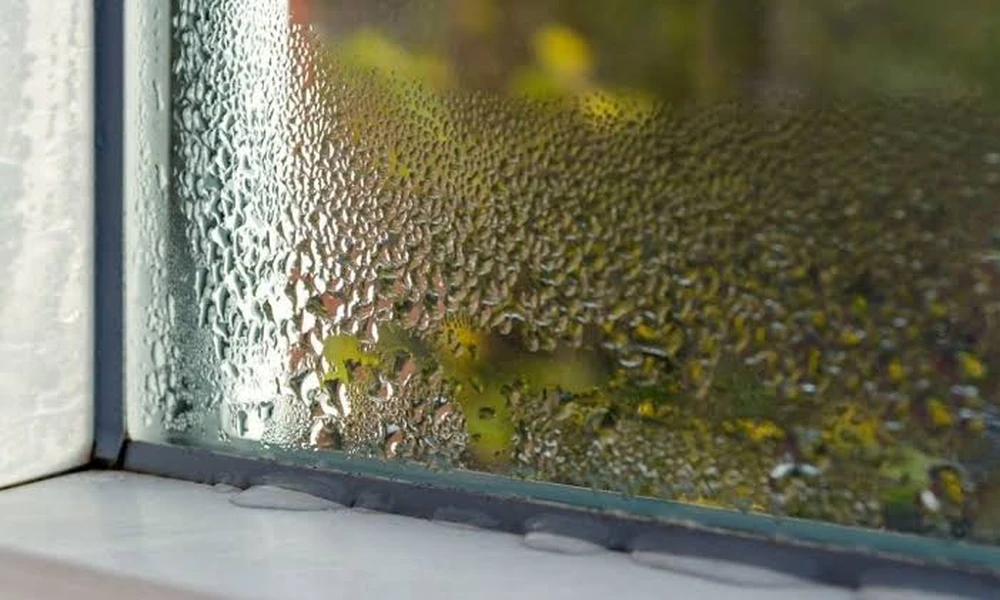
There’s one winter exception. When nights drop into the teens, the inside surface of window glass gets cold enough to collect condensation even at 40 percent. Water pooling on sills and dripping onto wooden frames is a cue to dial the humidistat back toward 30 or 35 percent until the cold breaks. Many newer controls include an outdoor sensor that makes this adjustment automatically, which spares you from chasing the weather forecast.
Above Sixty and Climbing
Summer flips the problem. A Northern Virginia July can bring dew points in the 70s, and that moisture works its way indoors through every door opening, crack and shower. Your air conditioner is meant to handle it. As warm air passes over the cold indoor coil, water condenses out and drips down the drain line, which is why a healthy system dries the house while it cools.
Several things quietly undo that drying work. An oversized air conditioner cools the house so quickly that it shuts off before the coil gets cold enough, long enough, to pull much water out. The result is a house that reads 72 degrees yet feels like a damp cellar. Leaving the thermostat fan set to “on” instead of “auto” causes a similar problem, because the blower keeps running between cooling cycles and blows the water still clinging to the coil right back into the rooms.
Systems with variable speed blowers or two stage compressors handle humidity better because they run longer at gentler speeds, giving the coil time to work. Some thermostats also offer a dehumidify setting that slows the blower during humid stretches.
The trickiest weeks are often in late spring and early fall. Mild afternoons mean the air conditioner barely runs, but the air is still heavy with moisture. That’s when a whole house dehumidifier connected to the ductwork earns its keep, drying the air without overcooling it.
Rooms That Keep Their Own Weather
Even when the main living space reads perfectly, certain rooms run their own climate.
Basements sit against cool, damp soil, and a finished lower level in a Prince William County split foyer can hover several points above the rest of the house all summer. A dedicated dehumidifier with a drain hose, or a ducted unit, keeps carpet and stored boxes from turning musty.
Bathrooms produce bursts of moisture with every shower. An exhaust fan should run for about 20 minutes afterward and vent outdoors rather than into the attic, where that warm, wet air can rot sheathing over time.
Laundry areas deserve a closer look than they usually get. A dryer vent clogged with lint can’t expel moist exhaust properly, so drying times stretch longer, the room grows humid and the trapped lint becomes a genuine fire hazard. Cleaning the full vent run once a year solves all three issues at once.
Kitchens add steam from pots and dishwashers, so a range hood that actually vents outside is far more useful than a recirculating one when it comes to moisture.
Letting the Numbers Guide Your Next Service Visit
Once you’ve watched a hygrometer for a few weeks, you start noticing patterns that a technician can use. A reading that refuses to drop below 60 percent on a hot day points toward an oversized unit, a fan setting problem or a coil that needs cleaning. A winter reading stuck in the teens despite a working humidifier suggests a dried out pad, a clogged water valve or air leaks pulling moisture out as fast as it goes in.
Writing those readings down, along with the date and the outdoor weather, turns a vague complaint like “the house feels off” into evidence. It also helps you judge whether a new system or an add-on did its job, because comfort should show up on that little screen, not just in a sales brochure.
So yes, indoor humidity should change with the seasons, but only within a sensible band. The goal is a house that holds steady near the middle while the weather outside swings from bone dry to soaking wet, and the equipment you already own, tuned and set correctly, can do most of that work.
